How to turn your dreams into reality with AI?
How to turn your dreams into reality with AI?
KH-01: Kampot's Smart Pepper Farm Redefines Premium Agriculture
From Dubai's Billions to Cambodia's Smart Solution
Dubai just approved a $2.7 billion vertical farm complex. But a Chinese container farm produces the same yield per square meter for $15,000 — shipped anywhere in 30 days. This stark contrast in agricultural economics drives our exploration of KH-01, AustinEco's flagship Virtual Demo Farm in Cambodia's Kampot province, where traditional pepper cultivation meets cutting-edge technology to create a replicable model for high-value tropical agriculture.
Located in the heart of Cambodia's most famous agricultural region, this 18-hectare demonstration site proves that smart farming technology can enhance rather than replace traditional expertise. Explore in 3D to see how ancient pepper vines integrate with modern IoT sensors.
Strategic Location: Cambodia's Agricultural Crown Jewel
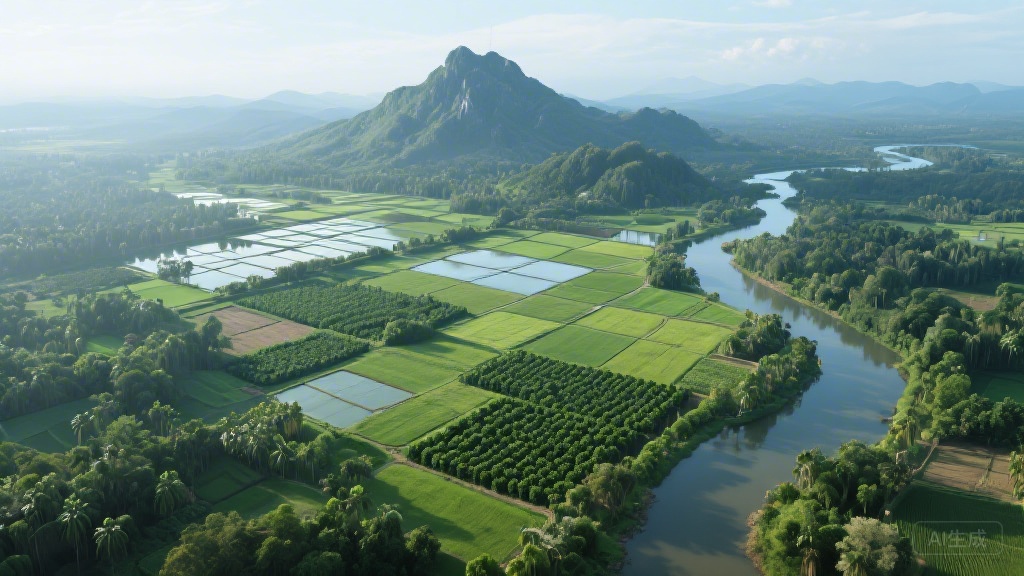
KH-01 sits at GPS coordinates 10.61°N, 104.3162°E, precisely positioned in Kampot province's rolling hills 25 kilometers inland from the Gulf of Thailand. The farm's irregular polygon boundary encompasses prime agricultural land between the Kampot River valley and the Elephant Mountains foothills, at an elevation of 45-78 meters above sea level.
This location was chosen for three critical factors: microclimate stability from mountain protection, water access via the Kampot River system, and logistics proximity to both Sihanoukville port (90 minutes) and Phnom Penh markets (3 hours). The site benefits from well-drained lateritic soils ideal for pepper cultivation, with year-round temperatures between 24-32°C and distinct wet/dry seasons.
Google Maps satellite imagery reveals the farm's strategic position within Cambodia's Geographic Indication (GI) protected Kampot pepper zone — the only region authorized to produce this premium spice that commands $80/kg compared to $8/kg for standard black pepper. Explore this farm in 3D to understand how topography influences crop placement and water flow patterns.
Climate Profile: Tropical Monsoon Advantage
KH-01 operates within Cambodia's tropical monsoon climate zone, characterized by distinct wet (May-October) and dry (November-April) seasons. Annual rainfall averages 1,800mm, with 80% concentrated during monsoon months. This natural irrigation cycle eliminates the need for extensive dry-season watering while providing ideal conditions for pepper flowering and fruit development.
Temperature stability proves crucial for premium pepper production — daytime highs of 28-32°C and nighttime lows of 22-26°C create the thermal stress patterns that develop Kampot pepper's distinctive flavor compounds. Humidity ranges from 60% (dry season) to 85% (wet season), requiring careful ventilation management to prevent fungal diseases.
The farm's low threat level reflects Cambodia's stable agricultural environment: minimal wildlife interference, low theft risk due to community integration, and manageable natural disaster exposure. The region experiences occasional flooding during extreme monsoon years, but elevated plantation areas and improved drainage systems mitigate these risks effectively.
High-Value Crop Strategy: Beyond Traditional Agriculture
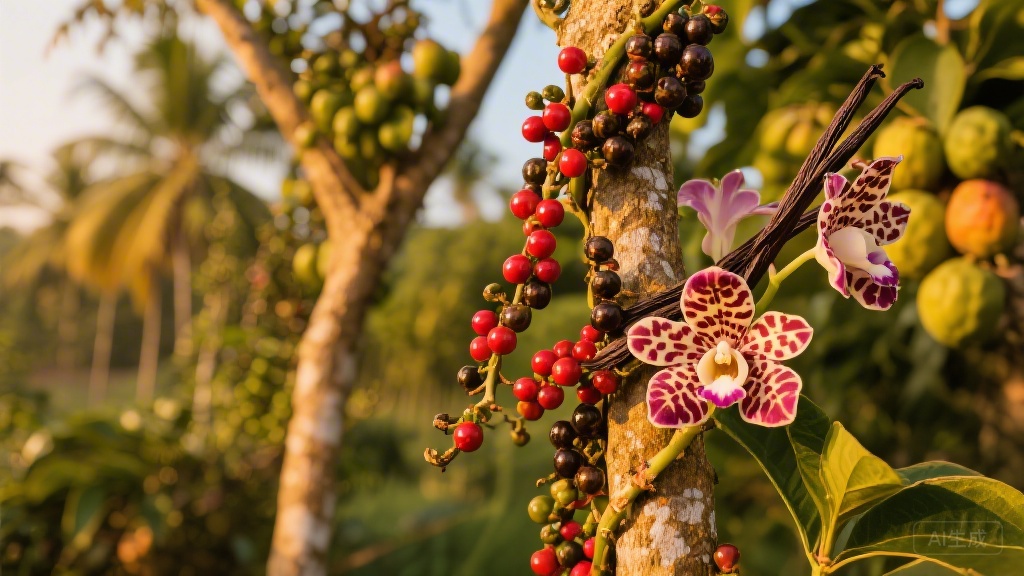
Kampot Black Pepper (Primary Crop): 2.5 hectares dedicated to GI-protected pepper vines yield 800kg/hectare annually, generating $64,000/hectare gross revenue. Premium red and white pepper variants command even higher prices — up to $120/kg for hand-selected red peppercorns. Target markets include European specialty food retailers, high-end restaurants in Singapore and Hong Kong, and North American gourmet distributors.
Dragon Fruit (Pitaya): 4 hectares of night-blooming cacti produce 15 tons/hectare, selling for $4-8/kg depending on variety and export destination. White-flesh varieties target Asian markets, while rare yellow dragon fruit commands premium prices in Western markets. The crop's drought tolerance makes it ideal for dry-season production.
Durian (King of Fruits): 3 hectares of carefully spaced trees (25 trees/hectare) yield 400kg/tree at maturity, generating $15,000-25,000/hectare annually. Monthong and Chanee varieties target Thailand and China export markets, where premium Cambodian durian sells for $8-12/kg wholesale.
Edible Bird's Nests: SwiftNest houses integrated throughout the farm produce 15-20kg annually of these prized delicacies, commanding $2,000-5,000/kg in Chinese markets. The symbiotic relationship between swiftlets and pepper plants creates natural pest control while generating substantial supplementary income.
Specialty Honey: Pepper flower honey represents a unique value-add product, with small-batch production (200kg annually) selling for $40-60/kg to gourmet markets. The mono-floral honey's distinctive spicy notes make it a sought-after ingredient for high-end culinary applications.
The Farm Owner's Vision
"My grandfather grew Kampot pepper using methods passed down for generations," explains the farm's conceptual owner. "But climate change and market competition mean we can't rely on tradition alone. I want to prove that technology can enhance, not replace, our agricultural heritage while creating a sustainable business my children will want to inherit."
The owner's priorities center on income diversification — reducing dependence on single crops through integrated agriculture and agritourism. Quality preservation remains paramount, ensuring that technological improvements never compromise the flavor profiles that make Kampot pepper world-renowned. Finally, knowledge transfer drives the demonstration farm concept, with plans to train neighboring farmers in sustainable intensification techniques.
"I envision this farm as a bridge between Cambodia's agricultural past and its high-tech future," the owner continues. "Every innovation must prove itself worthy of our soil and our traditions."
Current 16-Dimension Assessment
KH-01's current infrastructure reflects a farm in transition from traditional to smart agriculture:
- PowerGrid: 60/100 (Intermediate) - Solar arrays with battery backup cover 60% of energy needs
- ConnectHub: 60/100 (Intermediate) - 4G connectivity with IoT sensor network partially deployed
- SmartFarm: 45/100 (Basic) - SoilIQ sensors in pepper areas, manual irrigation in fruit zones
- Livestock: 45/100 (Basic) - SwiftNest houses operational, traditional poultry management
- AquaSystem: 45/100 (Basic) - Pond systems for irrigation storage, no aquaponics integration
- Entertainment: 30/100 (Planned) - GlampNest sites identified, infrastructure development pending
- Processing: 30/100 (Planned) - Basic pepper drying facilities, no value-add processing
Overall Average: 20/100
The three biggest improvement opportunities: (1) Processing integration for value-added products, (2) Entertainment infrastructure for agritourism revenue, and (3) Advanced automation across all farming operations.
Smart Farm Transformation: The Path Forward
KH-01's evolution toward world-class status focuses on sustainable intensification — dramatically increasing yields and income while preserving the artisanal quality that defines Kampot pepper's premium positioning. The upgrade path prioritizes processing infrastructure first (establishing on-site value addition), followed by entertainment facilities (capturing agritourism revenues), and finally advanced automation systems.
The farm's transformation embraces AustinEco's Standard Deployment configuration, balancing technology sophistication with practical implementation. Phase 1 targets 80+ scores in PowerGrid, ConnectHub, and SmartFarm dimensions. Phase 2 develops Processing and Entertainment to advanced levels. Phase 3 integrates all systems for seamless automation.
Community co-builders contribute crucial insights — from traditional pepper processing techniques to innovative tourism experiences. Local knowledge shapes technology deployment, ensuring cultural authenticity alongside operational efficiency. The collaborative approach has already generated 30+ improvement suggestions from regional farmers and agricultural experts.
Technology Deep Dive: Smart Soil Meets Ancient Wisdom
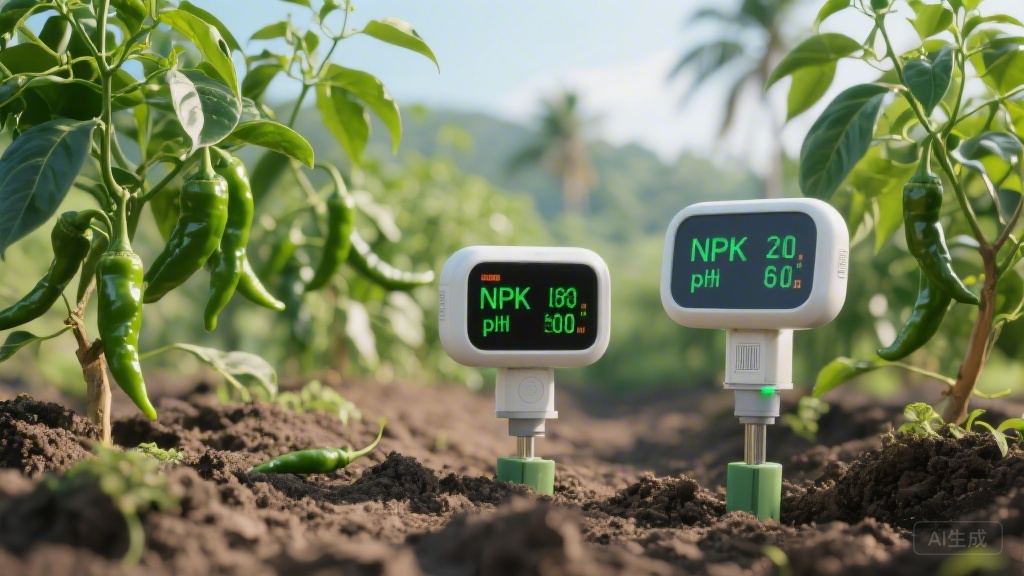
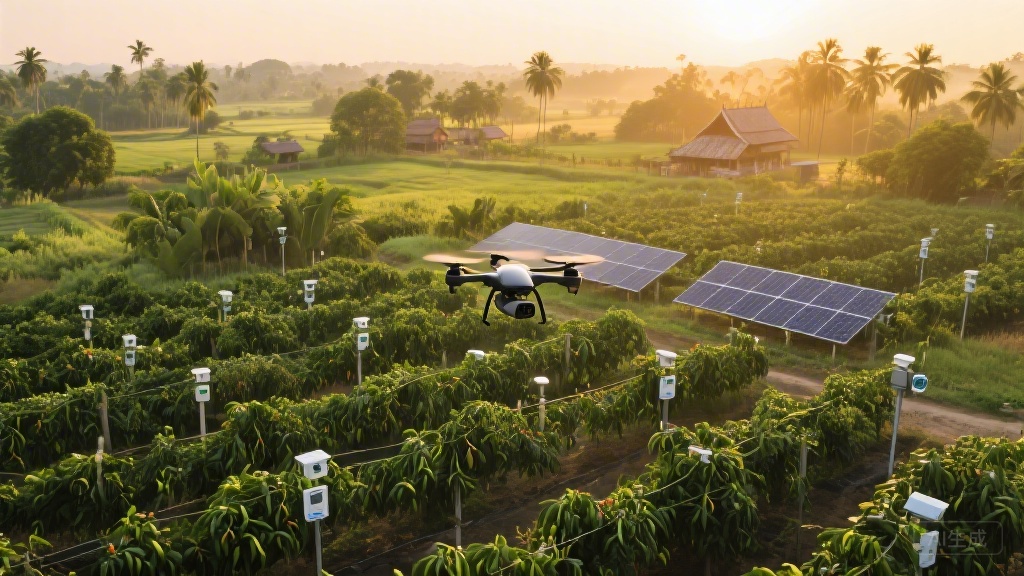
SoilIQ System Implementation: Traditional Kampot pepper cultivation relies on visual soil assessment and generational knowledge. SoilIQ transforms this intuition into precise data, measuring pH, moisture, nutrients, and organic matter levels every 30 minutes across 120 sensor nodes distributed throughout pepper growing areas.
Installation begins with soil mapping — technicians use GPS-guided augers to create a detailed soil profile, identifying microclimates that affect pepper quality. Each SoilIQ sensor node requires a 60cm deep installation hole, waterproofed housing, and solar charging panel. The system connects via LoRaWAN to central processing units housed in climate-controlled equipment shelters.
IrriSmart Precision Watering: Kampot pepper's distinctive flavor develops through controlled water stress during fruit maturation. IrriSmart's micro-irrigation system delivers precise water volumes based on real-time soil moisture, weather forecasts, and plant phenology data. Each pepper vine receives individual attention through dedicated drip emitters controlled by wireless valve actuators.
The system installation involves mapping existing water sources, installing filtration and pumping equipment, laying underground distribution pipes, and connecting wireless control valves. GuardBot sentries patrol the farm perimeter, preventing theft of valuable copper irrigation lines while monitoring for pest invasions and equipment malfunctions.
SwiftNest Integration: Traditional bird's nest farming relies on luck and patience. SwiftNest houses use bioacoustic systems to attract swiftlets, creating controlled environments that triple nest production rates. Sound systems broadcast specific swiftlet calls during peak attraction hours, while climate control maintains optimal temperature and humidity.
Each SwiftNest structure measures 8x12 meters with 4-meter height, featuring specialized entrance holes, internal partitioning, and integrated monitoring systems. Installation requires concrete foundations, steel frame construction, and careful positioning to avoid interference with farm operations while maximizing swiftlet comfort.
AustinEco Equipment Shopping List
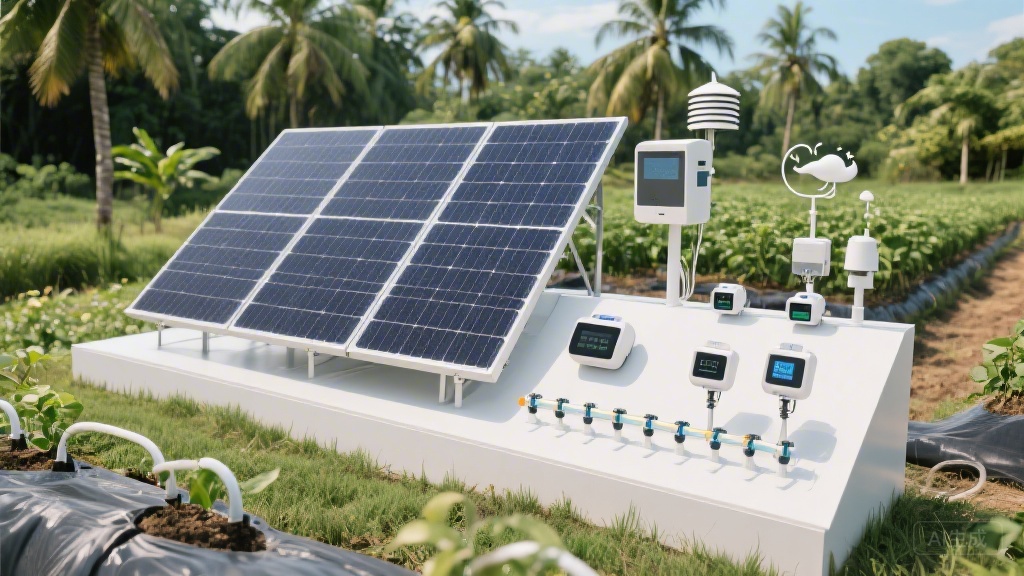
Core Smart Farming Package:
- SoilIQ Pro sensors (120 units): $180 China vs $540 Western price, HS code 9027.10
- IrriSmart controller hub: $2,400 China vs $8,500 Western, HS code 8481.80
- GuardBot security drones (4 units): $1,200 China vs $4,800 Western, HS code 8806.10
- WeatherNet station: $800 China vs $3,200 Western, HS code 9025.80
Power and Connectivity:
- SolarGrid array (25kW): $8,500 China vs $35,000 Western, HS code 8541.40
- ConnectHub 5G gateway: $900 China vs $2,700 Western, HS code 8517.62
Value-Addition Equipment:
- ProcessLine pepper sorting system: $15,000 China vs $65,000 Western, HS code 8479.89
- PackMaster vacuum sealers: $3,200 China vs $12,800 Western, HS code 8422.30
Installation complexity ranges from basic (SoilIQ sensors) to advanced (ProcessLine integration). Total equipment investment: $47,000 from China suppliers versus $198,000 from Western manufacturers — demonstrating the 76% cost advantage of strategic sourcing.
SmartTrade Integration: From Concept to Reality
AustinEco's SmartTrade platform transforms KH-01 from concept to operational reality through integrated procurement and logistics. The 56-dimension matching engine connects farm requirements with optimal Chinese suppliers, while the 22-node trade pipeline ensures seamless delivery from factory floors to Cambodian soil.
Equipment procurement leverages consolidated shipping — multiple technology packages ship together from Guangzhou port to Sihanoukville, reducing per-unit logistics costs by 40%. Airwallex cross-border payments eliminate traditional banking delays, enabling rapid order processing and supplier payments in RMB while maintaining USD accounting for farm budgets.
KH-01 represents SmartTrade's bidirectional capability — the farm imports technology while potentially exporting premium pepper, processed products, and consulting services. The same platform facilitating equipment purchases can later market Cambodia's agricultural exports to global buyers identified through the matching engine.
Smart contracts embedded in the trade pipeline ensure equipment performance guarantees, installation support, and ongoing technical assistance. Chinese suppliers commit to replacement parts availability and remote troubleshooting, creating sustainable technology partnerships beyond simple equipment sales.
Join the Agricultural Revolution
KH-01 demonstrates that smart agriculture isn't just about technology — it's about creating sustainable, profitable farming systems that honor traditional knowledge while embracing innovation. This Virtual Demo Farm serves as a blueprint for agricultural transformation across Southeast Asia and beyond.
Ready to explore? Experience KH-01 in immersive 3D to understand how each technology integrates with Cambodia's landscape. Submit your co-build ideas through our community platform — your insights could shape the next phase of development.
Want to design your own agricultural paradise? Visit our farm configurator to create custom solutions for your climate, crops, and investment goals.
This farm is evolving — what would YOU build here?